 Save
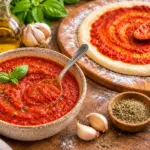
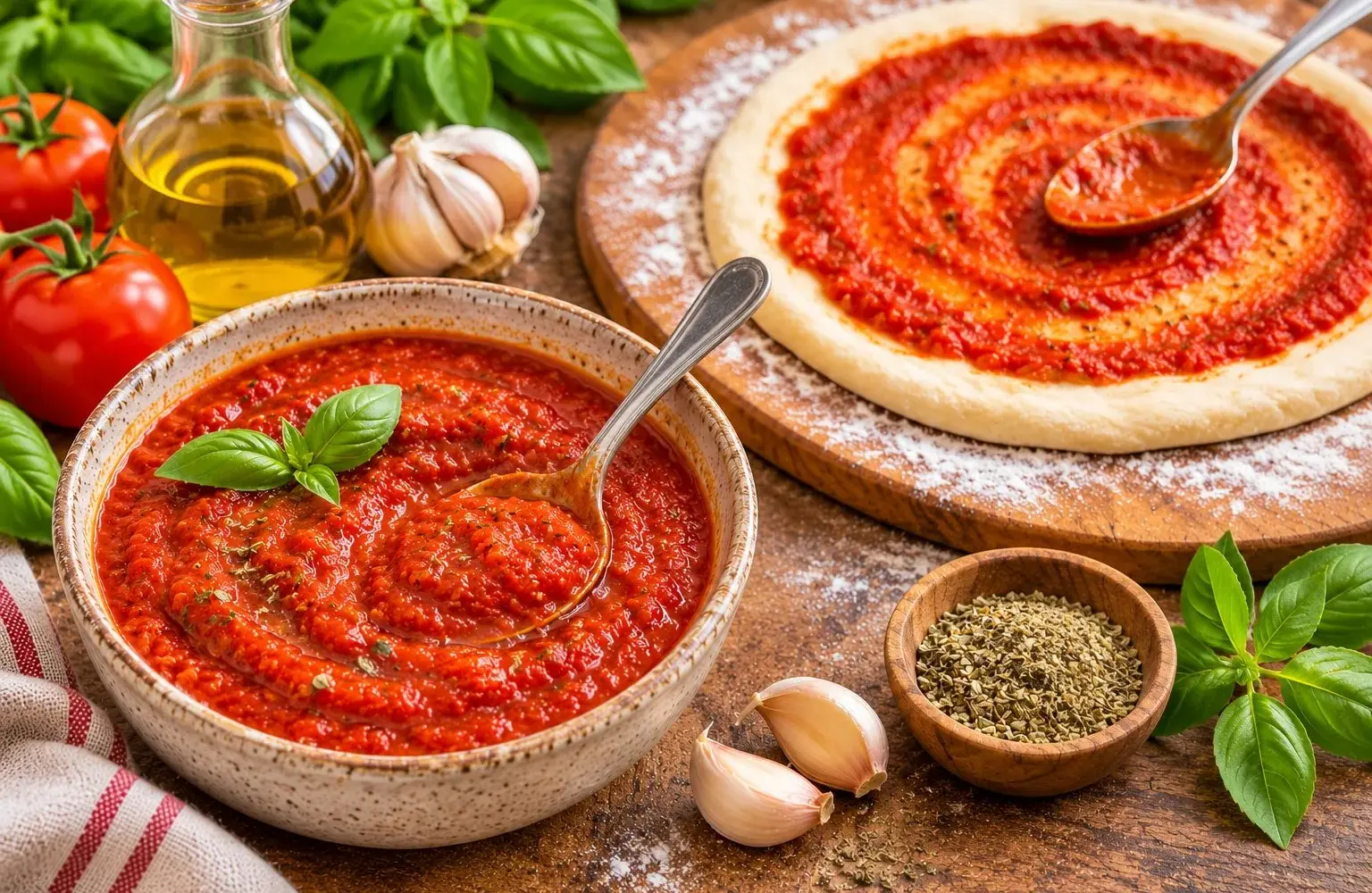
This pizza sauce recipe stirs together crushed tomatoes, tomato paste, olive oil, fresh garlic, dried oregano and basil, salt and a pinch of red pepper flakes. There’s no cooking: the sauce bakes on the pizza, so it stays bright and fresh-tasting. It takes about 5 minutes, plus a 10-minute rest for the flavors to blend, and makes about 2 cups, enough for three or four 12-inch pizzas. Below you’ll find why pizza sauce is thicker than pasta sauce, how much to spread, a cooked version, and how to store and freeze it.
What Makes Pizza Sauce Different?
Pizza sauce is thicker and more concentrated than pasta sauce. It has to sit on raw dough without soaking it, so it uses tomato paste for body instead of a long simmer. Most homemade versions are raw: the oven’s heat cooks the sauce while the pizza bakes.
Pizza sauce vs. marinara vs. white pizza sauce
| Pizza sauce | Marinara | White sauce | |
|---|---|---|---|
| Base | Crushed tomatoes, tomato paste | Tomatoes, garlic, olive oil | Butter, flour, milk |
| Cooked? | No (bakes on the pizza) | Simmered | Cooked on the stove |
| Texture | Thick, spreadable | Looser, saucy | Creamy |
| Best with | Pizza, flatbreads | Pasta, dipping | White pizza, lasagna |
Want a looser sauce for pasta or dipping? Try our easy marinara sauce. For a white pizza base, spread a thin layer of our homemade white sauce.
Ingredients You’ll Need
- Crushed tomatoes (one 15-ounce can): the base. Crushed tomatoes are already smooth with a little texture.
- Tomato paste (3 tablespoons): thickens the sauce so it doesn’t make the crust soggy.
- Extra-virgin olive oil (1 1/2 tablespoons): richness and a silky texture.
- Garlic (2 cloves, finely grated): grating spreads the flavor evenly through a raw sauce.
- Dried oregano (1 teaspoon) and dried basil (1/2 teaspoon): the classic pizza herbs.
- Salt (1/2 teaspoon), black pepper and red pepper flakes (a pinch each): seasoning.
- Sugar (1/2 teaspoon, optional): softens sharp, acidic tomatoes.
How to Make Pizza Sauce
- Stir. In a medium bowl, combine the crushed tomatoes, tomato paste, olive oil, garlic, oregano, basil, salt, black pepper, red pepper flakes and sugar. Stir until smooth.
- Rest. Let the sauce sit for about 10 minutes so the dried herbs soften and the garlic mellows.
- Taste. Add more salt or a pinch more sugar if needed. For a smoother sauce, blend it briefly.
How Much Sauce Per Pizza
| Pizza size | Sauce |
|---|---|
| 10-inch | About 1/3 cup |
| 12-inch | About 1/2 cup |
| 14-inch | About 2/3 cup |
Spread it in a thin, even layer, leaving a 1/2-inch border for the crust. Too much sauce can make the center soggy.
Cooked Pizza Sauce
If you prefer a deeper, sweeter flavor, warm the olive oil in a small saucepan over medium-low heat, cook the garlic for 30 seconds, then add the remaining ingredients. Simmer gently for 10 to 15 minutes, stirring often, until slightly thicker. Let it cool before spreading it on dough.
Storing Pizza Sauce
Refrigerate leftover sauce in a covered container within 2 hours, and keep your refrigerator at 40°F or below, as the CDC recommends. For longer storage, freeze it in portions (an ice-cube tray or small bags work well) and thaw in the refrigerator before using.
Frequently Asked Questions
Do you cook pizza sauce before putting it on pizza?
No. This sauce goes on raw and cooks in the oven. Cooking it first is optional for a deeper flavor.
Can I use marinara as pizza sauce?
You can, but it’s thinner. Simmer it a little longer or stir in some tomato paste to thicken it.
Can I make pizza sauce with tomato sauce instead of crushed tomatoes?
Yes. Use one 15-ounce can of tomato sauce; it will be smoother.
Can I use fresh herbs?
Yes. Use about three times as much fresh basil and oregano, chopped.
Can pizza sauce be frozen?
Yes. Spoon it into small bags or containers, then defrost it in the fridge before using.