 Save
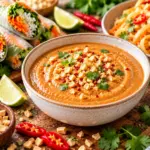
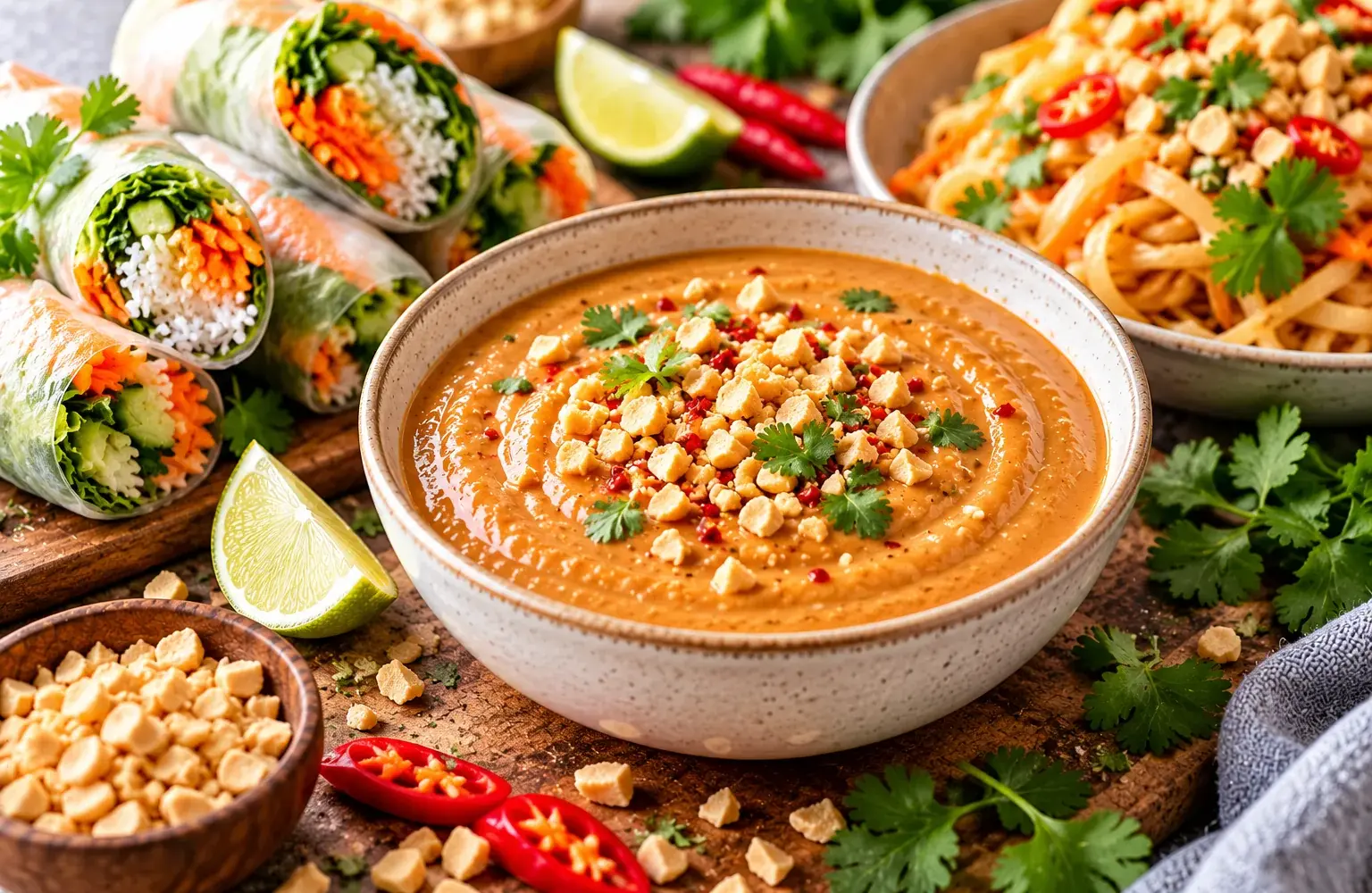
This Thai peanut sauce recipe whisks creamy peanut butter with soy sauce, lime juice, rice vinegar, a little brown sugar, fresh garlic and ginger, and a touch of sriracha, then loosens it with warm water. It’s a no-cook peanut sauce recipe that takes about 10 minutes and works three ways: thick for dipping spring rolls and satay, a little thinner for drizzling over bowls and salads, and thinner still for tossing with noodles. Below you’ll find how to adjust the texture for each use, how to make it vegan or gluten-free, and a peanut-free option.
What Is Thai Peanut Sauce?
Thai-style peanut sauce is a creamy, savory-sweet sauce built on peanuts, balanced with something salty (soy sauce), something sour (lime and vinegar), something sweet and a little heat. This version is a quick home take using peanut butter, so it comes together in one bowl without cooking. The flavor is rich and nutty with a bright, tangy finish, and the texture is easy to change with water.
Peanut sauce vs. yum yum and bang bang sauce
| Thai peanut sauce | Yum yum sauce | Bang bang sauce | |
|---|---|---|---|
| Base | Peanut butter | Mayonnaise | Mayonnaise |
| Flavor | Nutty, salty-sweet, tangy | Mild, lightly sweet, garlicky | Sweet and spicy |
| Common uses | Spring rolls, satay, noodles, salads | Hibachi shrimp, fried rice | Fried shrimp, tacos |
If you want a creamy mayo-based sauce instead, try our yum yum sauce or the sweeter, spicier bang bang sauce.
Ingredients You’ll Need
- Creamy peanut butter (1/2 cup): the base. Regular or natural both work; with natural peanut butter, stir the jar well first.
- Low-sodium soy sauce (2 tablespoons): salt and savory depth. Use tamari or coconut aminos if you need a gluten-free or soy-free option (check the label).
- Fresh lime juice (1 tablespoon) and rice vinegar (1 tablespoon): the tang that keeps the sauce from tasting heavy.
- Brown sugar (1 tablespoon): balances the salt and acid. Honey or maple syrup also works.
- Garlic (2 cloves, grated) and fresh ginger (1 teaspoon, grated): sharp, aromatic flavor. Grating helps them blend smoothly.
- Sriracha (1 teaspoon): gentle heat; add more to taste.
- Toasted sesame oil (1/2 teaspoon, optional): a nutty finish.
- Warm water (3 tablespoons): thins the sauce. Warm water loosens peanut butter more easily than cold.
How to Make Thai Peanut Sauce
- Mix the base. In a medium bowl, whisk the peanut butter, soy sauce, lime juice, rice vinegar, brown sugar, garlic, ginger, sriracha and sesame oil (if using). It will be very thick.
- Loosen it. Whisk in the warm water 1 tablespoon at a time until the sauce is smooth and thick enough for dipping.
- Taste and balance. Add more lime for tang, more sugar for sweetness, more sriracha for heat, or a splash more soy sauce for salt.
- Adjust the texture. Thin it further with more warm water if you want it for drizzling or noodles (see below).
How to Thin or Thicken It
Peanut butter brands vary in thickness, so add liquid gradually:
| Use | Texture | What to do |
|---|---|---|
| Dipping (spring rolls, satay, vegetables) | Thick, clings to food | Use the recipe as written |
| Drizzling (rice bowls, salads) | Pourable from a spoon | Whisk in 1 to 2 more tablespoons warm water |
| Noodle sauce | Loose, coats noodles | Whisk in more warm water or coconut milk, a tablespoon at a time, until it coats a spoon; toss with warm noodles |
If you’ve added too much liquid, whisk in another spoonful of peanut butter. For a richer, creamier sauce, use coconut milk instead of some or all of the water.
Peanut-Free, Vegan and Gluten-Free Options
- Peanut-free: use the same amount of sunflower seed butter in place of peanut butter. It makes a similar creamy sauce, but the flavor is different from the peanut version. If you’re cooking for someone with a peanut allergy, check every label, including the seed butter, for peanut cross-contact warnings, and follow their allergist’s advice. Peanuts are one of the major food allergens identified by the FDA, along with soy, wheat, fish and others.
- Vegan: this recipe is vegan as written when you use brown sugar or maple syrup. Avoid honey and fish sauce, which some versions add.
- Gluten-free: regular soy sauce usually contains wheat. Use a tamari or coconut aminos labeled gluten-free, and check your other ingredients.
How to Use Thai Peanut Sauce
Serve it as a dip for fresh spring rolls, chicken or tofu satay, and raw vegetables; drizzle it over rice bowls, slaws and salads; or thin it and toss with warm noodles and crunchy vegetables. For another sauce to keep on hand for noodles and bowls, try our homemade teriyaki sauce.
Frequently Asked Questions
What are the main ingredients in peanut sauce?
Peanut butter, a salty ingredient such as soy sauce, an acid such as lime juice or vinegar, a sweetener and water or coconut milk to thin it. Garlic, ginger and chili add depth and heat.
What’s the simplest version?
For a quick sauce, whisk peanut butter with soy sauce, lime juice and warm water. It won’t be as layered as the full recipe, but it works in a pinch.
How do I thin peanut butter into a sauce?
Whisk in warm water or coconut milk a tablespoon at a time. Warm liquid blends into peanut butter more easily than cold.
Is peanut sauce vegan?
This recipe is, as long as you use brown sugar or maple syrup. Some recipes add honey or fish sauce, which are not vegan.
How should I store peanut sauce?
Refrigerate it in a covered container within 2 hours of making it (1 hour if it’s above 90°F), and keep your fridge at 40°F or below, as the CDC advises. It thickens when cold; stir in a little warm water before serving.